






In the Know
Skin Needling Benefits: What It Does to Your Skin and Why It Actually Works
Get in touch with us
Skin needling has moved from fringe skincare trend to one of the most clinically studied non-surgical skin treatments available. Here’s what it genuinely does — and what you should look for before booking.
TL;DR: Skin needling (microneedling) creates precise micro-injuries in the dermis that trigger a natural wound-healing response. The result is increased collagen and elastin production, leading to firmer skin, reduced acne scarring, smaller-looking pores, and improved texture. Most patients need 3–6 sessions spaced 4–6 weeks apart. Downtime is 24–48 hours of redness. Results build progressively for 3–6 months post-treatment.
Explore our skin needling treatment page for full details. See how skin needling compares to treating acne scarring. Learn about our chemical peels as a complementary option, and explore all skin treatments we offer.
What Is Skin Needling and How Does It Work?
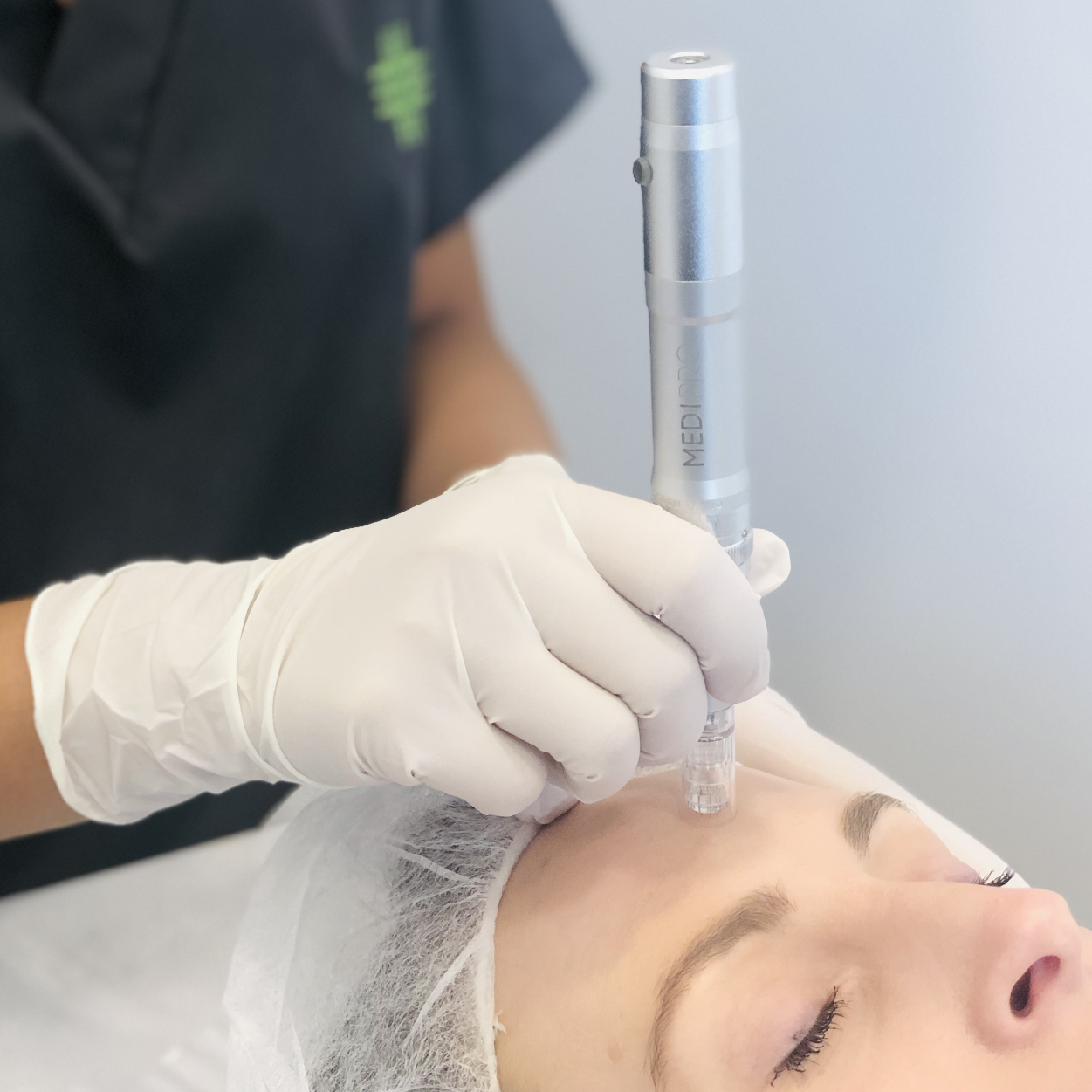
Skin needling — also called microneedling — uses a device studded with fine medical-grade needles to create thousands of microscopic puncture channels in the skin. The depth of penetration (typically 0.5mm to 2.5mm depending on the treatment goal) is precisely controlled by the device and adjusted by the clinician based on your skin concerns and tolerance.
These micro-channels are so small they are invisible to the naked eye and close within hours. But the body registers them as injury and initiates its wound-healing cascade. This triggers fibroblasts — the skin’s collagen-producing cells — to synthesise new collagen and elastin in the treated area. Over the following 4–12 weeks, the new tissue remodels and matures, producing the visible improvements patients see.
Importantly, because the epidermis (surface skin layer) remains largely intact, the risk of pigmentation complications is significantly lower than with ablative laser resurfacing — making skin needling one of the few collagen-stimulating treatments suitable for all skin tones.
Skin Needling vs Microneedling: Is There a Difference?
No — “skin needling” and “microneedling” refer to the same treatment. The term used varies by clinic and region. You may also hear “collagen induction therapy” (CIT), which is a clinical descriptor of the mechanism. All refer to the same process of creating controlled micro-injuries to stimulate collagen.
What does vary is the device quality and depth control. Medical-grade automated skin needling devices (used by clinics) differ significantly from at-home derma rollers, which cannot achieve consistent needle depth or the same level of sterility. At-home rollers are not recommended as a substitute for professional treatment.
The Key Benefits of Skin Needling — What the Evidence Shows
| Benefit | Mechanism | Improvement Timeline | Sessions Typically Needed |
|---|---|---|---|
| Acne scar reduction | Breaks down scar tissue; new collagen fills atrophic (depressed) scars from below | Visible from session 2–3; best at 3–6 months post-course | 4–6 sessions |
| Skin texture improvement | New collagen organises into smoother, more regular fibres than damaged or ageing skin | Noticeable after 1–2 sessions | 3–4 sessions |
| Pore size reduction | Collagen around pore openings tightens, reducing the appearance of enlarged pores | Progressive over 3–6 months | 3–5 sessions |
| Fine line reduction | Increased collagen density plumps the skin, reducing the depth of superficial fine lines | Gradual from session 2 | 3–4 sessions |
| Skin firmness | Elastin production improves skin’s rebound and tensile strength | 3–6 months post-course | 4–6 sessions |
| Pigmentation (mild) | Skin cell turnover post-needling can help fade mild post-inflammatory hyperpigmentation | Variable; not first-line for pigmentation | 4–6 sessions |
| Stretch marks (mild–moderate) | Collagen remodelling in dermal scar tissue of stretch marks | Slow; 3–6 months post-course | 4–8 sessions |
Skin Needling vs Chemical Peels: Which Is Better for Your Concern?
Both treatments improve skin quality, but they work differently and suit different concerns. The right choice depends on what you’re trying to address.
- Acne scars (atrophic / depressed): Skin needling is superior. It reaches the deeper dermal layer where depressed scars form, physically stimulating collagen fill-in. Chemical peels primarily resurface the epidermis and do not generate the dermal collagen needed to fill atrophic scars.
- Surface pigmentation and uneven skin tone: Chemical peels — particularly deeper peels containing TCA, glycolic acid, or salicylic acid — are more effective at accelerating cell turnover and reducing surface-level pigmentation.
- Overall skin radiance and texture: Both achieve this; many patients benefit from alternating between the two or using them together. A mandelic peel 4–6 weeks before a needling session, for example, prepares the skin surface while the needling session works deeper.
- Dark skin tones: Skin needling is safer across all skin tones because it does not generate the heat or broad-spectrum light that triggers post-inflammatory hyperpigmentation in melanin-rich skin. Deeper chemical peels require careful selection and experienced application on darker skin.
What to Expect From Your Skin Needling Session
Your clinician will cleanse and assess your skin, then apply a topical numbing cream. After 30–45 minutes, the anaesthetic is removed and the treatment begins. Depending on the areas treated, a session typically takes 30–60 minutes. Most patients describe the sensation as a mild scratching or vibrating pressure — the numbing cream makes the procedure comfortable for the majority.
Immediately after treatment, your skin will look like a mild sunburn — red and slightly warm. This is the inflammatory response that kick-starts your collagen production. It settles within 24–48 hours. Makeup can generally be worn from day 2. Sunscreen is non-negotiable for at least 2 weeks post-treatment.
Who Is a Good Candidate for Skin Needling?
Skin needling suits most skin types and tones. It is particularly well-suited for patients with:
- Atrophic acne scars (rolling, boxcar, or ice-pick)
- Enlarged pores, rough texture, or dull skin
- Early-stage skin laxity or fine lines
- Stretch marks (mild to moderate)
- Darker skin tones where heat-based treatments carry higher pigmentation risk
It is not suitable for patients with active acne, open wounds, certain skin conditions (rosacea during flare, psoriasis), or those on blood-thinning medications. A proper consultation will screen for contraindications.
Related Treatments Worth Considering
- Skin Needling (Microneedling): Professional-grade skin needling for acne scars, texture, pore size, fine lines, and overall skin quality. Available across face and body.
- Acne Scar Treatments: Targeted treatment plans for atrophic acne scarring combining skin needling, fractional laser, and chemical peels based on scar depth and skin type.
- Chemical Peels: Surface resurfacing peels targeting pigmentation, skin tone, texture, and congestion — effective alongside skin needling for comprehensive skin renewal.
- All Skin Treatments: Explore our full range of clinical skin treatments — from laser resurfacing to peels, RF, LED, and custom combination programmes.
Frequently Asked Questions About Skin Needling
Does skin needling hurt?
With numbing cream applied beforehand, most patients describe the treatment as mild pressure or a scratching sensation rather than pain. Some areas — nose, forehead, and upper lip — can be more sensitive. The numbing cream is applied for 30–45 minutes before the treatment begins.
How many skin needling sessions do I need?
For general skin quality and texture, 3–4 sessions spaced 4–6 weeks apart is a standard course. For acne scarring or more significant skin concerns, 4–6 sessions is more typical. Maintenance sessions every 6–12 months are recommended after completing an initial course.
How long is recovery after skin needling?
Redness and slight sensitivity typically resolve within 24–48 hours. Some patients experience mild flaking as the skin cell turnover accelerates. Most people return to normal activities the following day. We recommend avoiding intense exercise, heat exposure, and heavy makeup for 24 hours post-treatment.
Is skin needling safe for all skin tones?
Yes — skin needling is one of the safest collagen-stimulating treatments for darker skin tones because it does not generate heat or light that triggers post-inflammatory hyperpigmentation. It is a preferred option for Fitzpatrick skin types IV–VI who may not be candidates for aggressive laser or chemical peel treatments.
Can I use skincare products after skin needling?
For the first 24–48 hours, only gentle, fragrance-free products and broad-spectrum SPF50 sunscreen should be applied. Avoid actives (retinol, vitamin C, AHAs, BHAs) for at least 72 hours. Your clinician will provide a post-treatment skincare protocol tailored to your skin.
What is the difference between professional skin needling and a home derma roller?
Significant. Professional automated skin needling devices deliver needles at controlled depths (0.5–2.5mm) with consistent penetration across the entire treatment area. Home rollers cannot achieve consistent depth, are difficult to sterilise, and typically only reach 0.2–0.5mm — not deep enough to stimulate meaningful collagen production. Professional treatment is in a different category.
Book a Skin Needling Consultation in Sydney
Our clinical team will assess your skin concerns, review your skin type, and recommend the right treatment depth and session plan for your goals.